Patio Covers Arlington TX: Why Fall Is the Time to Plan
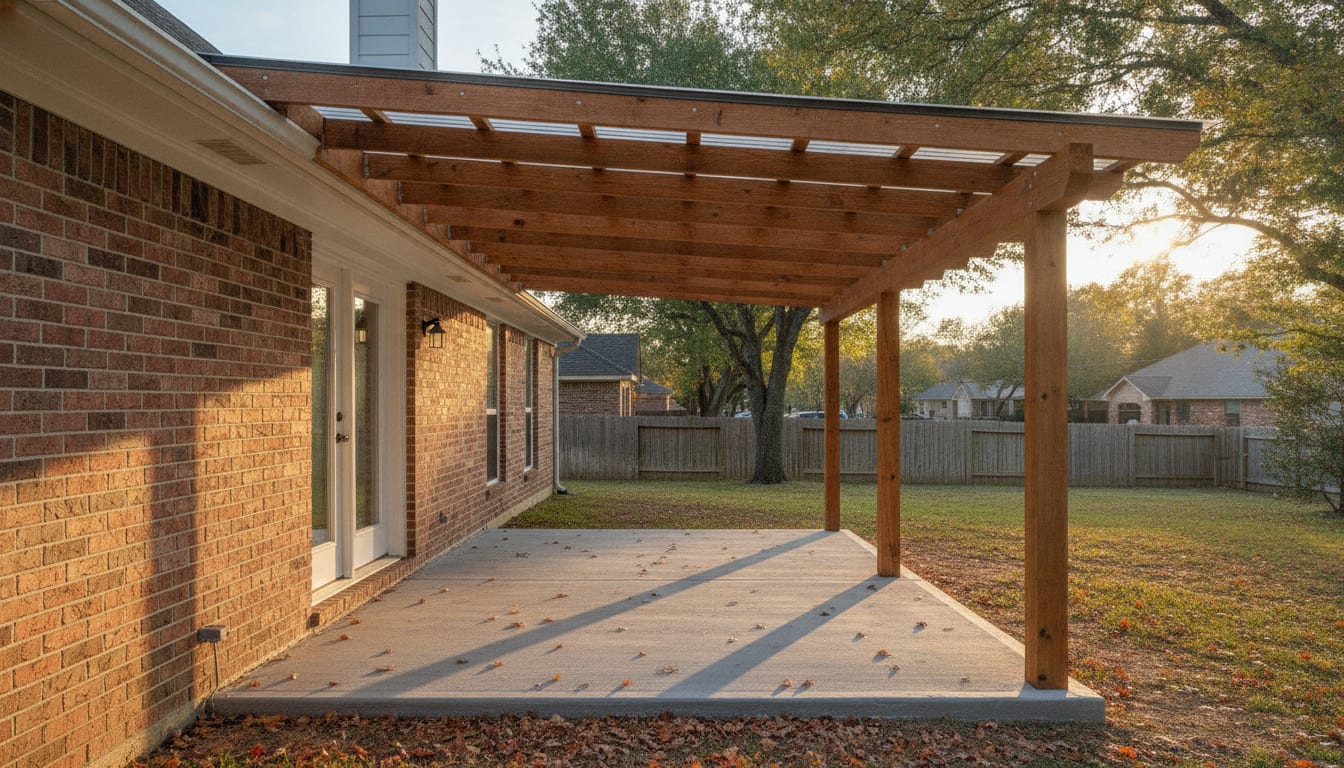
Thinking about patio covers in Arlington TX? Fall is the best time to plan pergolas, carports and screened porches before spring. Free on-site estimates.
Once the hundred-degree stretch finally breaks, most Arlington homeowners start looking at their backyard again instead of avoiding it. That's exactly why fall is the smart window to plan a patio cover, pergola, carport or screened porch - the weather is comfortable enough to actually use the space while it's being built, and you'll be sitting under it, not sweating under it, by the time spring parties roll around.
Why Fall Beats Waiting Until Spring
Everybody wants outdoor living space the second it gets warm, which means spring is when every patio cover contractor in the Metroplex gets booked solid. Planning in the fall means you're ahead of that rush. It's also easier on concrete work - cooler temperatures are friendlier to curing slabs than July heat, and carpentry and painting both go smoother without surface temperatures pushing well past the air temperature, which is the real limit on exterior work here, not just how hot the day feels.
Attached Covers, Freestanding Covers, Pergolas and Carports
"Patio cover" actually covers a handful of different projects, and the right one depends on your house and what you want out of the space. An attached cover ties into the existing roofline and usually needs the most care around flashing and tie-in so it doesn't create a leak path. A freestanding cover sits independent of the house, which gives more flexibility on placement. A pergola gives filtered shade rather than full coverage - popular for Coppell and Colleyville backyards where people want the look without blocking all the light. Carports and screened porches solve different problems entirely: one protects a vehicle, the other keeps the mosquitoes out while you still get the breeze. Anaya's Touch Renovations has built carports and screened in patios for past customers, along with the concrete work underneath when a slab needs pouring or extending.
Permits and the Texas Licensing Reality
A quick fact that surprises a lot of homeowners: Texas doesn't issue a state license for general contractors, remodelers or roofers. It only licenses the trades behind the walls - plumbing through the Texas State Board of Plumbing Examiners, and electrical through the Texas Department of Licensing and Regulation. So when you're comparing patio cover bids, don't ask for a general contractor's license, because none exists to show you. Instead ask for proof of insurance, a written scope of work, and whether the job pulls a permit - Arlington and most surrounding cities require one for attached structures and anything involving new footings. A contractor who works only with licensed subcontractors for plumbing and electrical, and who's upfront about permits, is giving you the real signals to look for.
The Concrete Underneath Matters As Much As the Cover
DFW sits on expansive clay soil that swells when it's wet and shrinks in a drought, and that movement is behind a lot of the cracking and settling people see in patio slabs over time. A properly prepped slab - the right thickness, proper base, control joints in the right places - handles that seasonal shift far better than a thin pour poured in a hurry. If your project needs a new slab, or if you're extending an existing patio to fit a cover, that's concrete work worth getting right the first time, since a cover is only as good as what it's sitting on.
One Contractor, Start to Finish
A patio cover project often touches more trades than people expect - concrete, framing, roofing or metal work, paint or stain, sometimes electrical for a fan or lighting. Eduardo Anaya built Anaya's Touch Renovations around that exact problem: one contractor who handles it A to Z instead of homeowners juggling a concrete guy, a carpenter and a painter who each blame the others when something doesn't line up. Patio covers are one of the four jobs Eduardo specifically built the business around, alongside kitchen remodeling, bathroom remodeling and room additions - so it's not a side job squeezed between other work.
Planning Your Project This Fall
If you're in Arlington, Grand Prairie, Irving, Mansfield, or anywhere else within about 35 miles - plus Plano, Frisco or McKinney to the north - fall is a good time to get a free on-site estimate scheduled before the spring rush fills up calendars across the Metroplex. There's no obligation, and no number gets attached until Eduardo has actually seen your yard, your house, and what you're hoping to do with the space.
Frequently Asked Questions
Do I need a permit for a patio cover in Arlington?
Most attached patio covers and anything involving new concrete footings require a permit in Arlington and surrounding cities - it depends on size, attachment method and whether it's freestanding. Eduardo can walk through what your specific project needs when he's out for the estimate.
What's the difference between a patio cover and a pergola?
A patio cover is typically solid roofing material that blocks sun and rain completely, while a pergola has an open or slatted top that filters light without full coverage. Which one makes sense usually comes down to whether you want full shade or more of an open-air feel.
Can you pour a new concrete slab if my patio doesn't have one yet?
Yes - concrete work is part of the patio cover process when a slab needs pouring or extending, and getting the base and thickness right matters a lot on North Texas clay soil, which shifts seasonally and can crack a poorly prepped slab over time.