Patio Cover Permit Requirements in Texas: What Homeowners Need
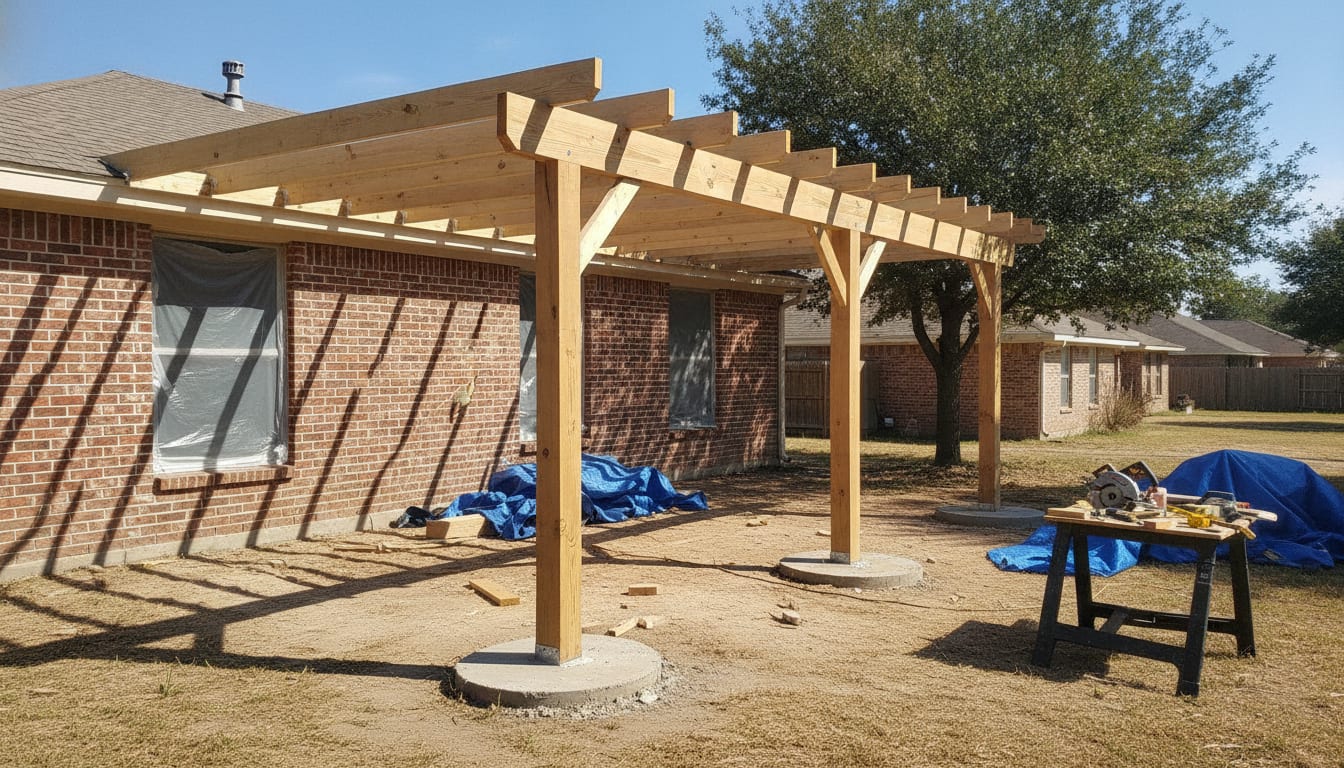
Attached vs freestanding patio covers, when a slab needs a permit, and why Texas doesn't license contractors. A DFW homeowner's guide.
Patio covers are one of those projects that feel simple until you start asking your city what paperwork it wants. The honest answer is: it depends - on your city, whether the cover is attached or freestanding, and whether a new slab is involved. Here's how it actually breaks down across the DFW Metroplex.
Attached vs. Freestanding: Why It Matters
An attached patio cover ties into your existing roofline or exterior wall. Because it's structurally connected to the house, most cities in the Metroplex want a building permit for it - they're checking the roof tie-in, the ledger attachment, and how it sheds water away from your existing structure. A freestanding cover or pergola, especially a smaller one not attached to the house, sometimes clears a lower threshold in some cities, but "sometimes" is doing a lot of work in that sentence. Permit rules vary city to city across Arlington, Grand Prairie, Irving, Coppell, Richardson, Plano, Frisco and McKinney, and they change. We're not going to guess at your city's current threshold here - that's exactly what a permit office phone call or an experienced contractor confirms before anyone pours concrete.
When a Slab Brings Its Own Rules
If your patio cover project includes pouring a new slab or extending an existing one - which it often does, since a lot of older DFW homes have a cover plan but an undersized pad - that slab typically needs its own permit and inspection, separate from the cover structure itself. Footings for the support posts matter too. On the expansive clay that sits under most of the Metroplex, footings that are too shallow or undersized are exactly what causes a patio cover to heave, crack, or pull away from the house a few years down the road. This soil swells when it's wet and shrinks hard in a Texas summer drought, and a patio structure sitting on inadequate footings moves with it.
Why Permits Are Worth the Hassle
It's tempting to skip the permit on something that "just" covers a patio. But an unpermitted structural addition can complicate a home sale, cause problems with insurance after storm damage, and in the case of hail - which Tarrant, Dallas and Collin counties see more of than almost anywhere in the country - an unpermitted cover can be a headache to get repaired or replaced through a claim. Permits also mean an inspector actually checks the framing and the roof tie-in before it's closed up, which is cheap insurance against a cover that leaks into your house the first time it rains sideways.
Here's the Bigger Point About Texas Contractors
Texas doesn't issue a state license for general contractors, remodelers, or roofers - there's no license number to check for the person building your patio cover. What Texas does license is plumbing, through the Texas State Board of Plumbing Examiners, and electrical, through the Texas Department of Licensing and Regulation. So when you're picking someone for a patio cover, room addition, or any renovation, the useful questions aren't "are you licensed" - they're whether the company carries insurance, whether they'll pull the permit, and whether the trades that are licensed in Texas are actually licensed subcontractors.
How Anaya's Touch Handles It
Eduardo Anaya has been running Anaya's Touch Renovations since 2016, family owned and operated, and patio covers are one of the four jobs he names as his favorite work - attached covers, freestanding covers, pergolas, carports, screened porches, and the concrete slab work that goes with them. He's built carports and screened-in patios for past customers around Arlington and the Metroplex. Anaya's Touch is insured and works only with licensed subcontractors for the plumbing and electrical that some larger patio projects need, and Eduardo handles the scope, the permit conversation, and the build himself - he's the one who comes out, estimates the job, and runs it start to finish. He's rated 5.0 on Google across 38 reviews, which is worth a read if you want to see what past customers say about the process.
Estimates are free and on-site, with no obligation, and that's really the fastest way to get a straight answer on what your city will require for your specific cover and slab. Spanish is spoken too, for anyone who'd rather talk through the project that way.
Frequently Asked Questions
Do I need a permit for a patio cover in Arlington or elsewhere in DFW?
Most attached patio covers need a building permit because they tie into your home's structure, and a new or extended slab usually needs its own permit and inspection. Requirements vary by city, so the safest move is to confirm with your local permit office or have your contractor check before work starts.
Why do patio cover posts or slabs crack or shift after a year or two?
In North Texas, it's usually the expansive clay soil underneath - it swells when it rains and shrinks in dry stretches, and footings that are too shallow or undersized move with that cycle. Proper footing depth for your soil conditions is what keeps a cover stable long-term.
Do I need a licensed contractor for a patio cover in Texas?
Texas doesn't issue a state license for general contractors, remodelers, or roofers, so there's no license number to verify there. What you can and should check is insurance, a written scope of work, and whether any plumbing or electrical involved is handled by a properly licensed subcontractor.