Expansive Clay Soil Foundation Movement in DFW: Fall Signs
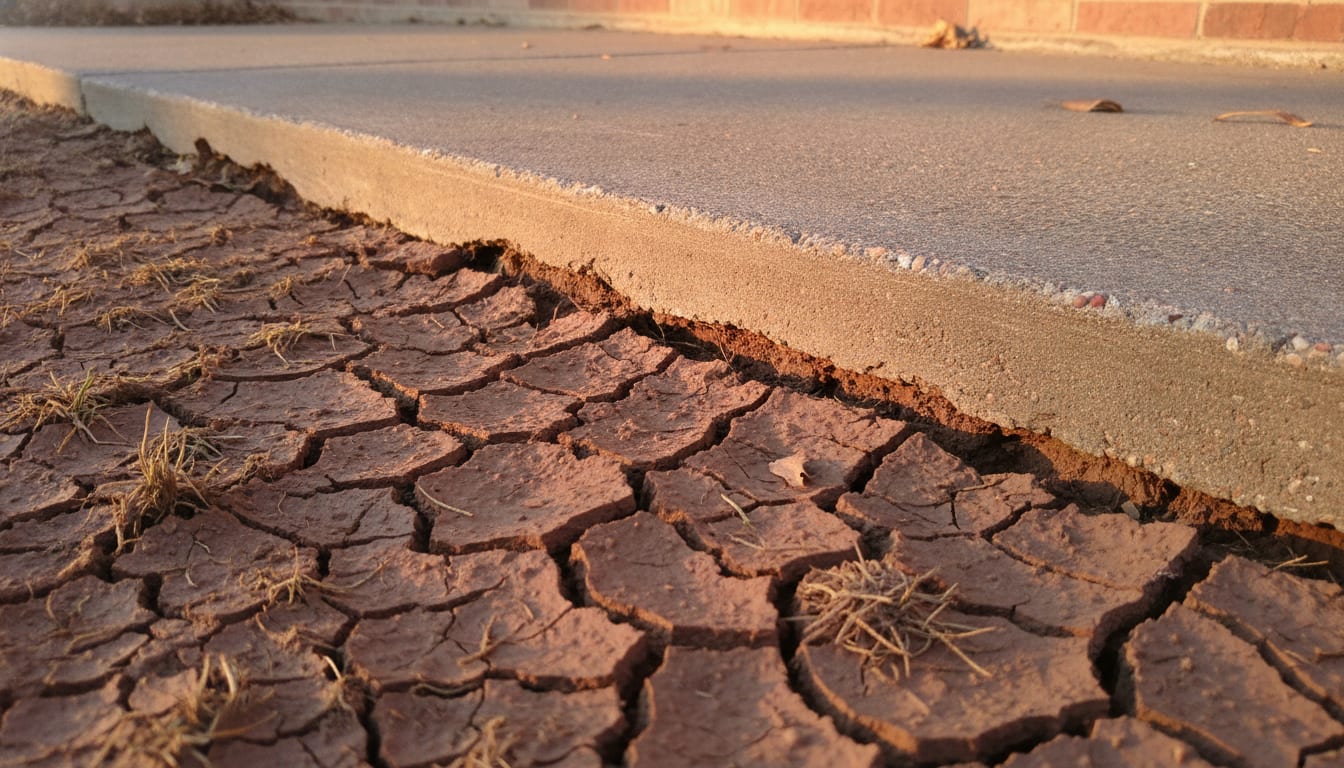
Why DFW's clay soil causes cracks and sticking doors as fall dries out the ground, and how water management is the cheapest defense. Free estimates.
If you've lived in the DFW Metroplex for more than a year, you've probably noticed your house does a little seasonal dance. Doors that shut fine in spring stick in August. A crack in the hallway drywall gets patched, and six months later it's back in the exact same spot. None of that is your imagination, and most of the time it isn't your house falling apart either. It's the ground underneath it.
Why DFW Soil Moves So Much
Most of Tarrant, Dallas and Collin counties sit on expansive clay. That clay swells when it's wet and shrinks when it dries out, and the swing between the two isn't small. In a normal year, soil under a slab might move a fraction of an inch. In a hot, dry stretch - like the one that typically sets in as summer fades into fall - that same soil can pull back several inches from the edges of a foundation as it loses moisture. The slab doesn't move as one solid piece either; it follows the ground, which means some parts of the house settle a little more than others.
That's why fall is when a lot of homeowners start noticing things. The rain backs off, the clay shrinks, and small shifts that were masked by wetter soil all summer suddenly show up as a sticking door, a new hairline crack, or a crack that reopens right where it was patched last year.
The Signs Worth Watching
A few patterns show up again and again in North Texas homes, whether it's a 1960s ranch in older Arlington or a two-story brick in Coppell:
- A crack that gets filled and comes back in the same place within a season or two
- Diagonal cracks running off the corners of doors and windows
- Doors that stick in one season and swing free in another
- Stair-step cracks in exterior brick, following the mortar lines
None of that automatically means a foundation has failed. It usually means the ground is doing what North Texas clay does. But a pattern like that is worth having someone actually look at, because a patch on a wall that's still moving really only buys you a season before the crack telegraphs right back through the drywall or texture.
Water Management Is the Cheapest Defense
You can't stop clay from being clay, but you can even out how much water it gets, and that's the single cheapest thing a homeowner can do. A few basics go a long way: gutters that actually discharge water away from the foundation instead of dumping it along the slab edge, grading that slopes away from the house rather than toward it, and consistent watering around the foundation during the driest summer and fall stretches so the soil doesn't shrink unevenly on one side of the house. It's not glamorous work, but it's a lot cheaper than chasing cracks every year.
When It's More Than a Crack
If the cracking is cosmetic - nail pops, a hairline crack in a ceiling corner, a seam that opened up - that's a straightforward drywall and texture repair, and matching the existing texture (knockdown, orange peel, whatever your home has) is part of doing it right so the patch doesn't stand out. But if you're seeing the fuller pattern - recurring cracks, sticking doors, stair-step brick - that's worth a proper look before any cosmetic fix goes on. In North Texas that pattern is usually the ground moving rather than the drywall, and it's better to know what you're dealing with than to keep repainting over the same spot.
One Contractor, Honest Answers
Anaya's Touch Renovations is a family-owned renovation contractor based in Arlington, serving the DFW Metroplex - Grand Prairie, Irving, Coppell, Colleyville, Richardson, Plano, Frisco and McKinney included. Eduardo Anaya has run it himself since 2016, and he does the estimating and the work, not a salesperson. One fact worth knowing as you compare contractors: Texas licenses plumbers and electricians, but it does not issue a state license for general contractors, remodelers or roofers. So instead of asking for a license that doesn't exist, ask for insurance certificates, a written scope, and references - Anaya's Touch carries insurance and works only with licensed subcontractors for plumbing and electrical work, and Eduardo is happy to provide a certificate.
Whether it's drywall and texture repair, exterior paint and caulk maintenance, or a fuller look at what's moving behind the wall, a free on-site estimate is the place to start - no obligation, and no guesswork over the phone.
Frequently Asked Questions
Why do drywall cracks keep coming back in my house?
In most DFW homes, recurring cracks trace back to the clay soil underneath shifting with the seasons - swelling when it's wet, shrinking when it's dry. A crack gets patched, the ground moves again, and it reopens in the same spot. That's why a pattern of recurring cracks is worth having looked at before another patch goes on.
Does a sticking door in fall mean my foundation has failed?
Not necessarily. Doors that stick in one season and swing freely in another are a very common sign of normal seasonal slab movement on North Texas clay, not proof of foundation failure. It's still worth having someone take a real look if the sticking is new, worsening, or paired with other signs like stair-step brick cracks.
What's the cheapest way to protect my foundation from clay soil movement?
Managing water around the slab is the most cost-effective defense: gutters that discharge well away from the foundation, grading that slopes away from the house, and steady watering near the slab during dry stretches so the soil doesn't shrink unevenly. It won't stop clay from moving entirely, but it keeps the swings smaller and more even.