Bathroom Tile Selection Guide for DFW Homes This Fall
A practical bathroom tile selection guide for DFW homeowners - what holds up on slab homes, and why the waterproofing behind it matters most.
Picking tile is the fun part of a bathroom remodel - swatches, showroom samples, maybe a Pinterest board you've been building for a year. But here in the DFW Metroplex, the tile you choose matters a lot less than what goes in behind it. Fall into winter, when a lot of homeowners tackle interior projects they put off all summer, is a good time to get this right.
Durable Tile Choices for North Texas Bathrooms
Porcelain tile is the workhorse for most DFW bathrooms. It's denser than ceramic, absorbs almost no water, and handles the humidity swings of a shower space without much drama. Ceramic is a fine, more budget-friendly option for walls and lower-traffic areas like a powder room, but for shower floors and tub surrounds, porcelain earns its keep.
Large-format tile has gotten popular, and there's a real reason for it beyond looks - fewer grout lines mean fewer spots for water to find a path through. That said, bigger tile takes a flatter substrate to lay correctly, which matters on older slab homes in Arlington, Irving, or Richardson where the floor may have settled unevenly over the decades.
Natural stone - marble, travertine, slate - looks beautiful but needs sealing and more upkeep than porcelain. It's a fine choice if you know what you're signing up for maintenance-wise, but it's not the low-maintenance pick for a busy household bathroom.
Why the Waterproofing Behind the Tile Matters More
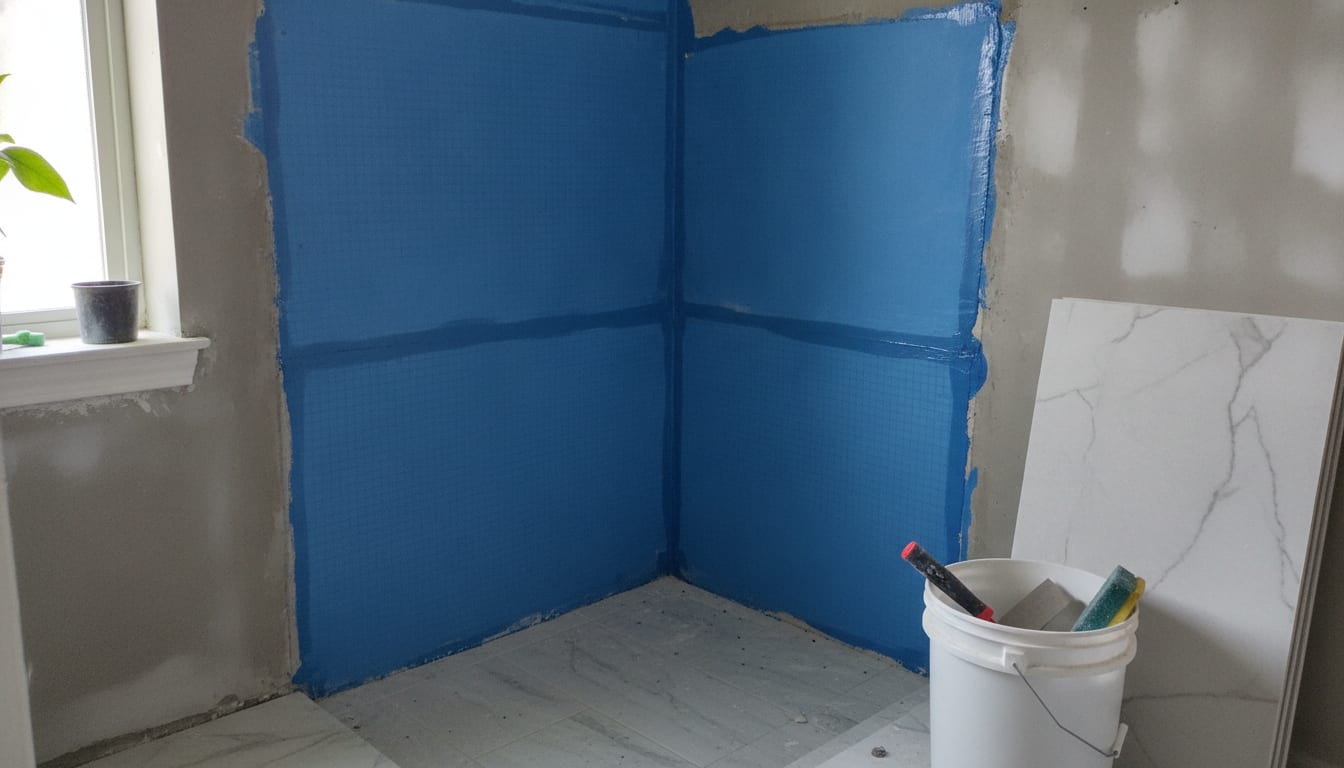
Here's the thing nobody tells you at the tile showroom: tile and grout are not waterproof. They're water-resistant at best. The actual waterproofing happens behind the tile, in a membrane system - whether that's a sheet membrane, a liquid-applied coating, or a properly built pan beneath a shower floor. Grout is porous. Water gets through it eventually, every time. What stops that water from reaching your wall framing, your subfloor, or the apartment below if you're in a multi-story building, is the membrane behind the tile - not the tile itself.
This is where a lot of bathroom remodels quietly go wrong. Someone skips or skimps on the waterproofing step to save time, the tile goes up looking great, and eighteen months later there's a soft spot in the subfloor or a stain showing up on a ceiling below. By the time you see damage on the surface, the moisture has usually been working behind the scenes for a while.
What Good Waterproofing Looks Like
A properly waterproofed shower means the membrane runs continuously - up the walls to a reasonable height, across every seam, and tied into a shower pan or curb that's sloped correctly to the drain. Corners and niches are common weak points if they're not detailed carefully. None of this is visible once the tile's up, which is exactly why it's worth asking your contractor to walk you through it before the tile goes on, not after.
Slab Homes and Subfloor Considerations
Most DFW homes sit on concrete slab foundations, and concrete passes moisture even when it looks and feels dry. That's one more reason the waterproofing layer matters so much in a slab-on-grade bathroom - there's no crawlspace underneath to dry things out if something goes wrong. Flooring outside the wet zone - the rest of the bathroom floor - also benefits from porcelain or a quality LVP tile look over solid hardwood, which doesn't do well with the moisture and temperature swings concrete slabs bring.
A Fall and Winter Project
Interior work like a bathroom remodel runs year-round in North Texas, but fall and winter have a practical advantage: your bathroom is probably getting used less for anything but function, and a multi-week remodel is easier to live around when you're not also managing holiday guests in every other room - or you plan it so the guest bath stays usable while the primary gets the full treatment.
One Contractor, Start to Finish
Anaya's Touch Renovations has been doing full bathroom remodels across Arlington and the DFW Metroplex since 2016 - tile showers, waterproofing, vanities, flooring, the works, with licensed subcontractors handling anything behind the wall that Texas requires a license for, like plumbing. Eduardo Anaya runs the estimates and the jobs himself, family owned and operated, and the business sits at 5.0 stars from 38 reviews on Google - worth a read if you want to see what past customers say about the process. Estimates are free, on site, no obligation, and that's really the only way to get a straight answer on what your specific bathroom needs.
Frequently Asked Questions
Is porcelain or ceramic tile better for a DFW bathroom?
Porcelain is generally the stronger choice for shower floors and wet areas because it absorbs less water and holds up better over time. Ceramic works fine for walls or lower-moisture spots like a powder room, and it's often a more budget-friendly pick there.
Why does my shower leak even though the tile looks fine?
Tile and grout aren't actually waterproof - the membrane behind the tile is what keeps water out of your walls and subfloor. If that layer was installed poorly or skipped, water can work its way behind the tile for months before you see a sign of it on the surface.
Can you waterproof and retile just my shower without redoing the whole bathroom?
Yes - a shower or tub surround can often be redone on its own if the rest of the bathroom is in good shape. Eduardo can take a look at what's there and tell you honestly whether a partial job makes sense or whether the water damage has spread further than it looks.